“While uncertainty is still a prevalent phenomenon, one thing remains certain: volatility is here to stay. The key will be to ensure supply chains become more agile and robust,” according to CSCMP’s 2025 Annual State of Logistics Report.
An Economist Impact survey found that 55% of executives expect major disruptions in 2025. Supply chains need to adapt and endure, which increasingly means they need to be resilient and ready for the unexpected. This growing awareness is pushing many businesses to reevaluate how they plan, source and operate across their networks.
As conditions grow more complex, smart planning and flexible strategies are essential. Here are several strategies manufacturers, distributors, retailers, and fleets can use to future-proof their supply chains.
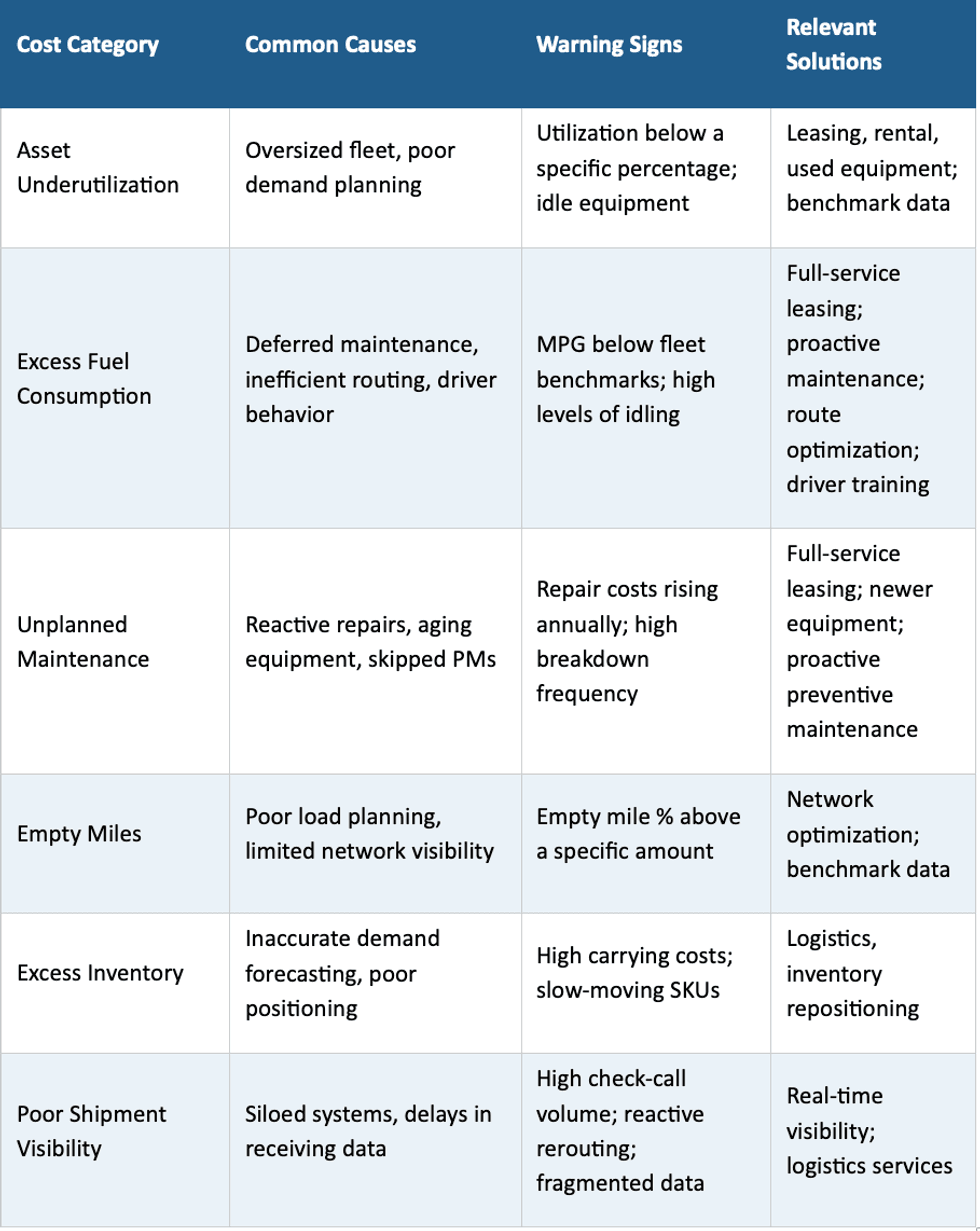
Right-Size Your Fleet
How fleets acquire, maintain and divest equipment directly affects their operational and financial performance, and fleet optimization begins with understanding how to match assets to operational needs. By analyzing historical, real-time and forecasted data, companies can determine the right mix and size of equipment needed.
Private fleets often rely on a blended strategy of leases, rentals and owned equipment to meet shifting capacity demands, lifecycle planning and evolving technology requirements. According to the 2024 National Private Truck Council Benchmarking Survey, 34% of fleets use a combination of ownership and leasing of heavy-duty equipment. Slightly more, 38%, own most of their equipment, and 28% lease all or most of their heavy-duty units.
Optimize Networks and Routes
An optimized supply chain network provides stability during disruptions and allows companies to scale as opportunities arise. We use advanced modeling tools to design the ideal logistics networks based on shippers’ priorities and operations.
Network design considers several factors, including various port, warehouse and supplier configurations, to identify ideal sourcing and storage locations and eliminate inefficiencies, reducing costs and improving delivery times.
At a tactical level, network design also identifies opportunities to cut costs and improve service levels. Examples include consolidating shipments and optimizing routes based on the time of day, traffic patterns and real-time weather or traffic disruptions.
The State of Logistics Report found that network design is shifting from a three-year effort to a more continuous exercise, aimed at keeping pace with the rate of change and volatility, and helping to future proof supply chains and your businesses against disruption.
Increase Visibility of Inventory
Transparency enables agility, and real-time visibility allows shippers to identify risks early and make proactive adjustments, such as rerouting freight, sourcing from another warehouse or moving up a shipment. Visibility also supports smarter inventory management, helping companies determine optimal reorder points and the most strategic sourcing locations.
Supply chain visibility, real-time tracking and reliable data are essential for companies focused on keeping inventory levels low. When various links in the supply chain are connected, technology can combine data on inventory with supplier lead times and anticipated demand to improve decision-making, making a just-in-time approach possible. Improved visibility is a powerful way to future proof freight flows and inventory strategies.
Use AI To Future Proof Operations
Trucking and supply chain operations are generating significant amounts of data from vehicles, engines, telematics devices, routing software and more. Artificial intelligence and machine learning can process massive amounts of data quickly to identify patterns and uncover correlations that humans might miss, enabling smarter and faster decisions. Fleets can use the information to enhance truck efficiency and get a comprehensive picture of their operations. AI is also being used to improve efficiency in warehouses and the yard, and to automate supply chain management tasks.
We use AI in several applications. Fleets can use Catalyst AI™ to improve miles-per-gallon and utilization. Our logistics company, Penske Logistics, utilizes AI-enabled yard management tools to automate trailer check-ins and check-outs, thereby increasing visibility into trailer locations and statuses, and streamlining yard operations while reducing manual errors. Other examples include network and route optimization, warehouse automation and more.
The State of Logistics Report noted that AI is no longer an emerging trend and AI-driven innovations are tools to enhance efficiency and resilience.“ As adoption accelerates, companies that embrace AI-driven efficiencies today will be best positioned to lead the next era of freight transportation,” researchers wrote. AI-enabled tools are quickly becoming must-haves for companies working to future-proof their supply chain.
Diversify Key Suppliers
Overreliance on a single supplier or geographic region can leave businesses vulnerable. To reduce risk, many companies are reevaluating supplier locations and adding new sources of supply for critical components and materials. According to the State of Logistics Report, 36% of shippers are embracing friendshoring, 32%, are creating parallel supply chains and 29% are expanding into neutral markets.
These sourcing strategies help ensure products are available as needed, without overstocking, but they also require adaptable logistics support. Penske helps businesses stay agile with a nationwide network of transportation options, making it easier to shift resources as supplier networks evolve.
Secure Capacity With Confidence
Shippers and transportation providers can access capacity in several ways, both for long-term needs and short-term capacity surges. Fleets with in-house transportation can secure rental trucks and short-term leases to meet short-term spikes in demand. Utilizing long-term leases or purchasing used trucks can support sustained demand.
Companies can also turn to logistics providers to access capacity through for-hire or dedicated fleets, or on the spot market via freight brokerage. As a broker, we have access to a large pool of Penske-qualified carriers, which enables us to find the best rates and value. Our carrier sourcing solutions have saved millions of dollars in transportation costs by reducing rates and offering better carrier selection. In addition, we have the processes in place to add new carriers in 30-45 minutes.
Tap Into Trailers
Trailers offer a scalable solution to meet shifting transportation capacity or storage needswithout the commitment and cost associated with adding trucks or leasing warehouse space. They can be added to an existing fleet to increase capacity, create trailer pools or serve as temporary warehousing solutions. Incorporating trailers into your fleet strategy is another way to add agility and future proof freight handling.
Create a Contingency Plan
Having a plan in place before it’s needed allows companies to pivot quickly if something unexpected occurs. Contingency planning is often associated with adverse events, such as extreme weather or global disruption, but it can also be helpful when new opportunities arise. Plans should evaluate solutions related to transportation, warehousing and fulfillment.
Developing alternative routes, maintaining backup suppliers and leveraging technology to simulate “what-if” scenarios are critical elements of preparedness. Being ready to act fast ensures companies aren’t losing market share as demands shift or disruptions occur.
Stay Prepared With Penske
Future proofing your supply chain starts with the right partner. We bring decades of experience, nationwide infrastructure, and advanced fleet and supply chain technology to help businesses stay agile, flexible and prepared.
In addition to full-service short- and long-term truck leases at Penske Truck Leasing, we have more than 85,000 commercial rental vehicles available through Penske Truck Rental, including high-roof cargo vans, straight trucks with liftgates, Class 8 tractors, and dry van, flatbed and refrigerated trailers.
For companies looking to expand or refresh their fleet with greater control, Penske Used Trucks offers well-maintained vehicles backed by strong maintenance records and transparent pricing.
Additionally, Penske Logistics provides transportation and warehousing solutions across the supply chain, including dedicated transportation, transportation management, distribution center management and supply chain management.
We are also investing heavily in technology to increase visibility, break down silos and improves decision-making.
From planning and capacity to technology and visibility, we help you future proof your supply chain every step of the way.
What's Next?
Regardless of where you begin, each part of your transportation strategy helps to build a more flexible and resilient supply chain. From acquiring the right vehicles to optimizing your logistics network, our business lines offer targeted solutions to help you stay ahead. Explore how each one supports your future proofing strategy:

 2025 Diamond Class Driver awards
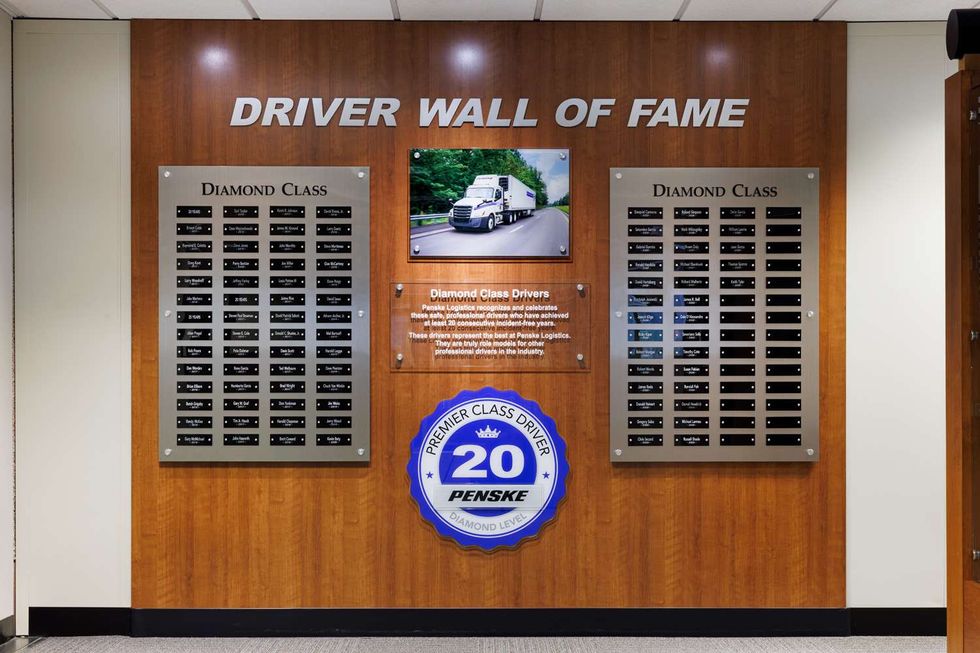 Penske Logistics Driver Wall of Fame located at company headquarters.